

How many restrooms does a county fair need in Lancaster?
Fairs are not construction sites, so the OSHA worker-count ratios do not apply directly, but they are still the closest published benchmark event planners lean on. OSHA 1926.51(c) sets 1 toilet per 20 people at the low end, and a fairground crowd behaves the same way in bathroom lines as a job site does at lunch. Lancaster Porta Pros builds fair counts around peak hour attendance, not the daily total, because everyone lines up between acts and cooking demos, not evenly through the day. For a two-day fair with 3,000 guests moving through daily, that usually means a bank of standard units plus a smaller run of deluxe flushable units near vendor rows, where people expect something closer to a real bathroom. Add ADA accessible units at a minimum of 5 percent of the total cluster, never fewer than one, per ADA Standards section 213.2. Each accessible unit needs a 60 inch turning circle inside per ADA Standards section 304.3.1 and a door opening at least 32 inches wide under ADA Standards section 404.2.3. If your event includes a beer garden or a livestock barn, treat those as separate zones and add a small cluster to each rather than routing everyone back to one central bank. Use the porta potty calculator guide to fine-tune before you request a quote.
What does it cost to rent restrooms for a fair in Lancaster?
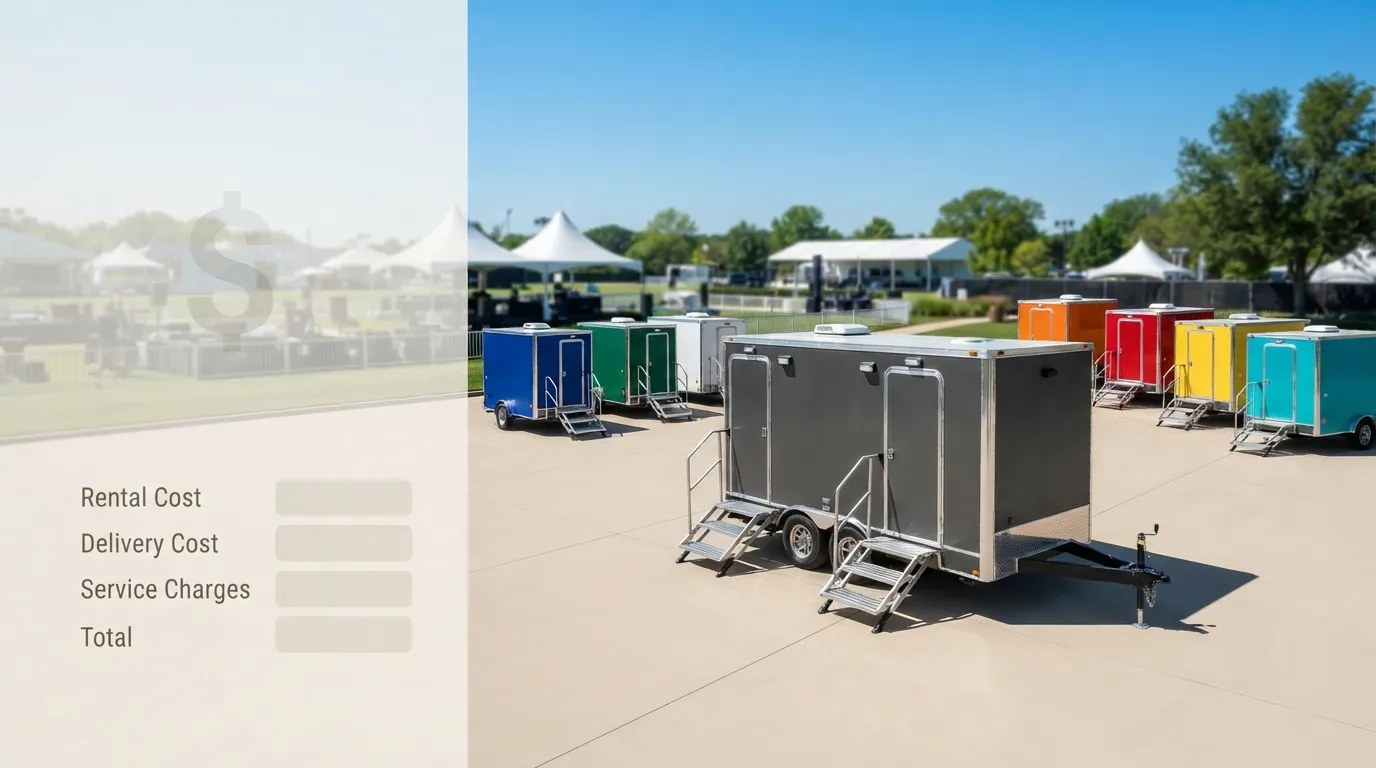
Pricing depends on unit type, how many days you need them, and whether you want flushable comfort near the main stage or just standard coverage along the midway. A multi-day fair usually rents by the week rather than the day, since delivery and pickup fees do not scale down for short runs.
| Unit | Day | Week | Month |
|---|---|---|---|
| Standard | $100-$350 | $130-$500 | $125-$325 |
| Deluxe flushable | $85-$1200 | $150-$290 | - |
| ADA accessible | $200-$400 | $240-$500 | - |
| Restroom trailer | $175-$2500 | $1650-$2500 | - |
A weekend-only fair typically runs closer to a flat weekend rate than the day rate multiplied out, so ask about that when you request a quote. Larger fairs pulling crowds that expect real sinks and mirrors often add a 4 stall restroom trailer or 8 stall restroom trailer near the entrance, priced separately from the general unit count. Full breakdowns live on the restroom trailer rental cost page and the porta potty rental cost page if you want to compare against a straight standard-unit layout.
Where should restrooms be placed on a fairground?
Placement matters more at a fair than almost any other event type, because foot traffic clusters hard around food vendors, the main stage and livestock areas, and thin out everywhere else. Lancaster Porta Pros walks the site with the organizer before delivery and marks spots with a stable, level surface, since ADA Standards section 302.1 requires firm, slip-resistant ground for accessible units. Keep a 36 inch clear path to every unit per ADA Standards section 403.5.1, which matters on gravel or dirt lots more than paved ones. Service trucks need a clear approach too. A roll-off or restroom trailer delivery generally needs about 60 feet of straight clearance behind the truck, so keep that lane open near loading gates and avoid boxing units in with vendor trailers or fencing panels. If the fairground layout calls for crowd lanes, pair your restroom clusters with temporary fence rental or crowd control barrier rental to keep lines from blocking walkways. Food vendor areas benefit from a nearby handwashing station rental or portable sink rental, separate from the restroom units themselves, since 29 CFR 1910.141(d)(2) calls for soap and towels or a hand-drying device, not just sanitizer. Fairs running food trucks with fryers should also plan a grease trap pumping schedule if any vendor ties into a grease interceptor on site. For fairs outside Lancaster proper, the same placement logic applies whether you are 5.6 miles out in Quartz Hill or 15.4 miles north in Rosamond.
Fair organizers coordinating a multi-day event should also plan waste removal beyond restrooms. Vendor rows generate cardboard and food waste fast, and a roll-off dumpster rental parked near the loading gate keeps that off the midway. Check what cannot go in a dumpster before fryer oil or livestock waste ends up in the wrong container. For fairs near Lancaster drawing from Acton, 19.2 miles south, or Sun Village, 20.5 miles southeast, confirm delivery windows early since rural access roads add time to the 60 foot clearance requirement.
How far in advance should I book fair restrooms?
Book as soon as your date and expected attendance are set, ideally 4 to 6 weeks out for a fair-sized event. Lancaster Porta Pros needs lead time to route trucks, confirm site access and stage enough units for peak-hour crowds rather than the daily average.
Do fairs need ADA-compliant restrooms?
Yes. Any cluster of single-user portable units must include at least 5 percent accessible units, never fewer than one, per ADA Standards section 213.2. Fairs drawing families and elderly visitors typically need more than the minimum.
Can I mix standard and deluxe flushable units at one fair?
Yes, and most organizers do. Standard units cover the midway and general grounds, while deluxe flushable units go near the grandstand or main stage where guests expect a closer-to-home experience.
Are handwashing stations required near food vendors?
Handwashing setups belong near any food or cooking area, separate from restroom units. 29 CFR 1910.141(d)(2) requires soap and towels or a drying device, not sanitizer alone, wherever food handling occurs.
What permits does a fair need for portable restrooms in Lancaster?
Placement and permit rules vary by venue and need confirming with the city before the event. Contact Lancaster Porta Pros early so site logistics and any required approvals line up with your delivery date.
Next step
Get a delivery date
Tell us the address, the dates and the headcount. We size the order and confirm the route.