
Where should a porta potty go on site?
Start with the ground. ADA Standards section 302.1 requires stable, firm, slip-resistant surfaces, and that rule is worth following even where accessibility units aren't required, because a unit that tips on soft dirt is a bigger problem than any code violation. Keep clear of septic drain fields, underground utility lines, and anything sloped enough to roll a hand truck. Lancaster job sites often sit on decomposed granite that shifts after wind or rain, so ask your delivery driver to check the pad before setting the unit down.
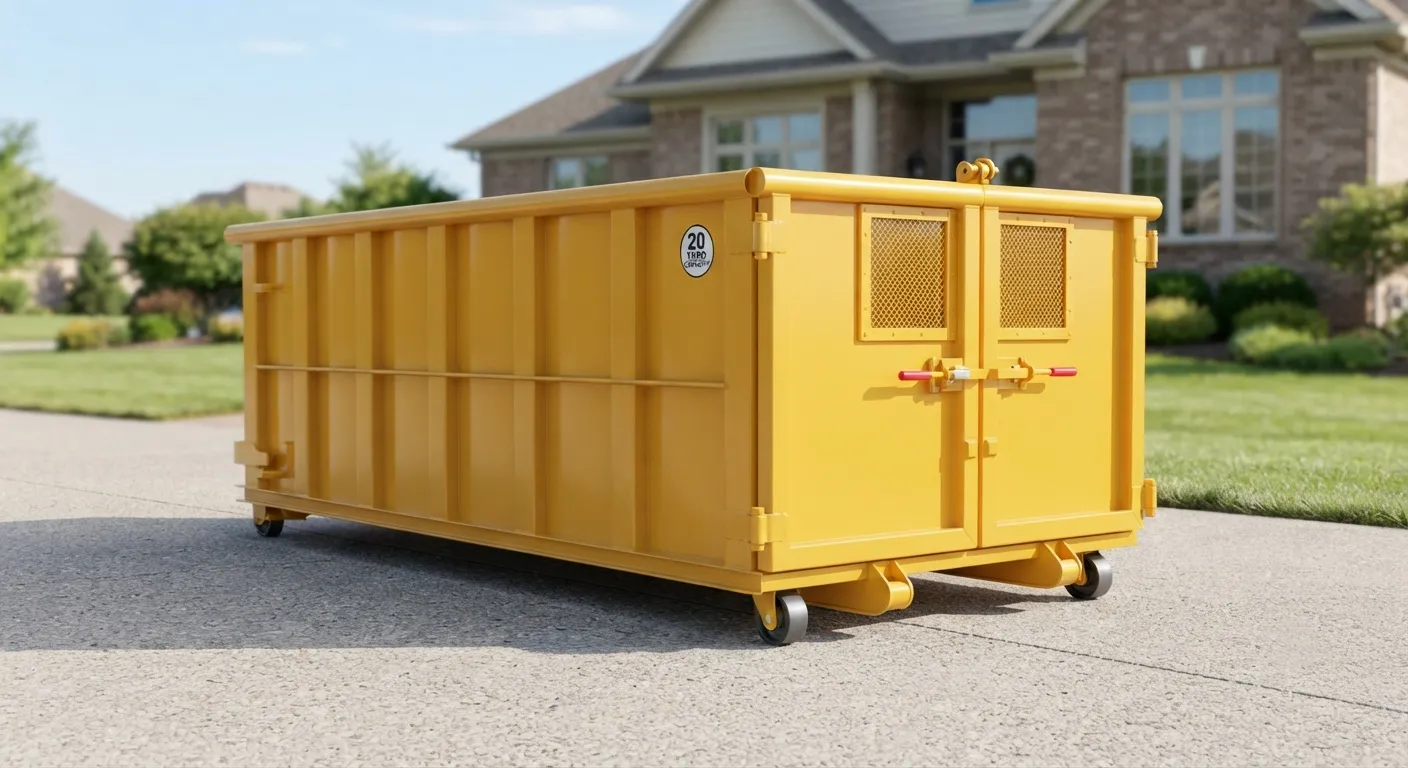
Leave 60 feet of straight clearance behind wherever a service truck will park, matching what a roll-off delivery needs for the same reason: trucks need room to back in and pump out without threading between vehicles or trailers. If you're also renting a construction dumpster or a storage container, plan both footprints together so the truck route works for all of them. For ADA-compliant placement specifically, see our ADA restroom requirements page, since section 213.2 requires at least one accessible unit in any cluster and section 304.3.1 calls for a 60 inch turning circle in front of it.
What are the porta potty placement rules for permits?
Placement inside your own property line usually doesn't need a permit, but placement in the public right of way, on a sidewalk, or blocking street parking is a different matter. That needs confirming with the City of Lancaster before delivery, and we don't guess at ordinance numbers here. The same caution applies to a dumpster placement permit: dumpster placement permit cost and process vary by parking lane and duration, and guessing at a fee is worse than asking. If your event sits on private land, like a church lot or a fairground, check with the property owner too, since some venues have their own placement rules layered on top of city code.
For construction sites, OSHA portable toilet requirements set the real baseline: OSHA 1926.51(c)(1) calls for 1 toilet for 20 workers or fewer, scaling to 1 toilet and 1 urinal per 40 workers past that point. That ratio drives placement as much as permits do, since a site with 60 workers needs units spread across the site, not clustered by one gate. Our how many porta potties do I need guide walks through the math for bigger crews.
Does placement change for events versus construction?
Yes, and mostly around foot traffic patterns and time. An event restroom rental for a wedding or festival gets placed for guest flow: near parking, visible from the main gathering area, but not next to the food tent. A wedding restroom rental often pairs a standard unit with a deluxe flushable option near the reception, since guests notice the difference. Festival restroom rental and concert restroom rental jobs need units staged in multiple clusters so lines don't back into walkways, echoing the same 36 inch clearance ADA Standards section 403.5.1 sets for accessible routes generally.
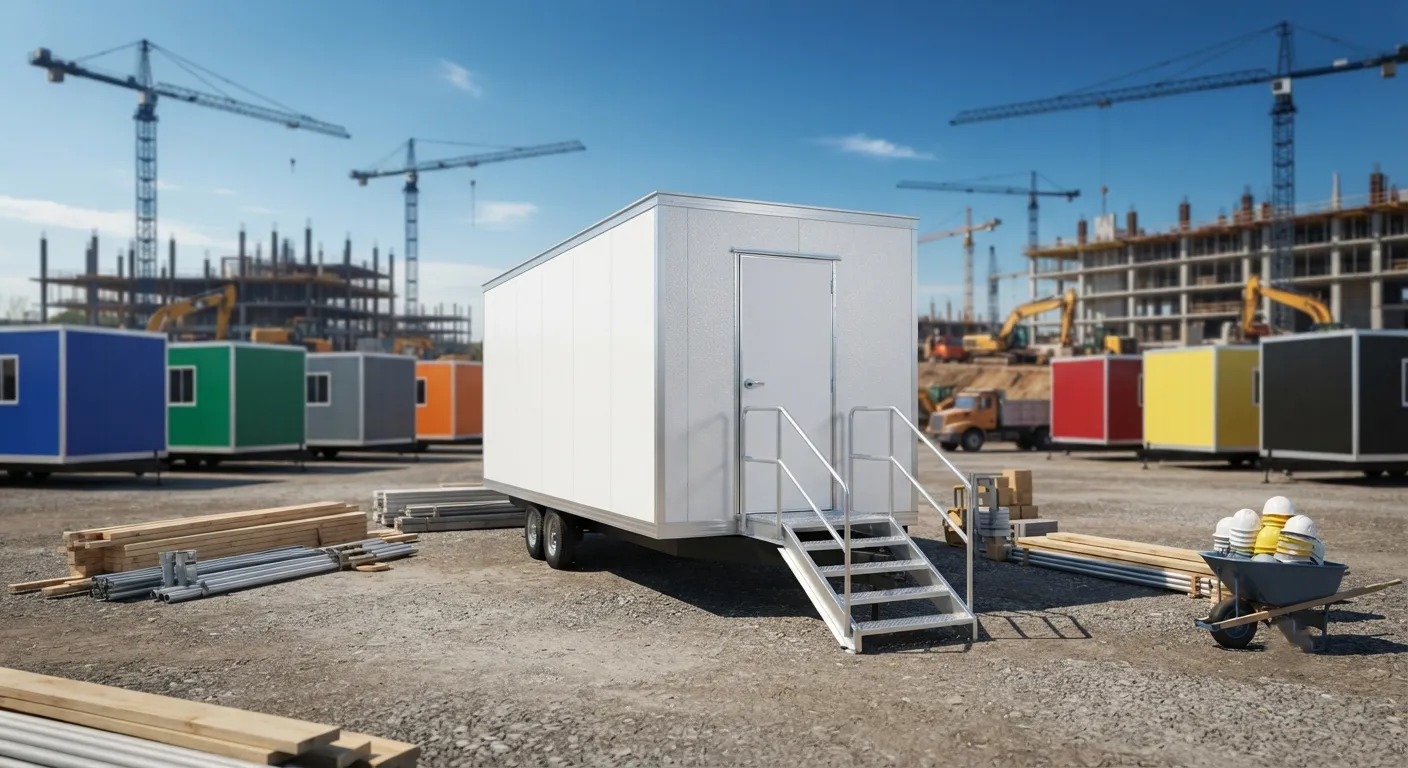
Construction placement is about the crew's actual movement across the day: near the break area, close enough to reach in a few minutes, but clear of forklift paths and material staging. OSHA 1926.25 requires job sites to keep debris out of work areas, and a porta potty parked in the wrong spot becomes an obstacle fast. If your project also needs a mobile office trailer, placing it near the toilet and handwashing station keeps the whole crew zone tight, and replacement doors for an older trailer unit are worth checking before the season starts, since a door that won't seal costs you in dust and heat both.
Do I need handwashing stations near the toilets?
Often, yes, especially with food service or paint and coating work nearby. 29 CFR 1910.141(d)(2) requires soap and towels or a hand-drying device at washing facilities, and hand sanitizer alone doesn't satisfy that. If your crew is applying paints, coatings, herbicides or insecticides, OSHA 1926.51(f)(1) requires washing facilities specifically because of those contaminants. Place a handwashing station or portable sink within a short walk of the toilets, not across the site, since distance is the main reason workers skip the step entirely. If a sink's pump or spigot needs work, Ozark River portable sink replacement parts cover most of the common wear points on units like that.
Agricultural sites follow a different standard: OSHA 1928.110 requires field sanitation facilities within a quarter mile walk of hand-labor employees, at one facility per 20 workers. Our farm and agricultural restrooms page covers that ratio in more detail for growers around Lancaster and out toward Rosamond, 15.4 miles north.
Can I place a porta potty near a septic system?
No, keep distance from the drain field and tank access points, since foot traffic and equipment can compact soil or damage buried lines. A residential septic tank typically needs pumping every 3 to 5 years depending on size and household, so protecting that system matters. See septic pumping service for scheduling; note that placer county and Placerville septic pumping service listings you may find online don't apply to Lancaster accounts, so confirm local service directly.
How far should a unit sit from a building entrance?
Far enough to keep the entrance clear, generally outside the swing of any door and off the accessible route. ADA Standards section 404.2.3 sets a 32 inch minimum clear door opening, a useful reference for keeping approach paths unobstructed near any placed unit.
Do I need extra clearance for delivery trucks?
Yes, plan on roughly 60 feet of straight clearance behind the unit's final position so the truck can back in and service it. Tight alleys or crowded lots in Lancaster often need a site walk before delivery day to confirm the route works.
What about placement for a restroom trailer instead of a standalone unit?
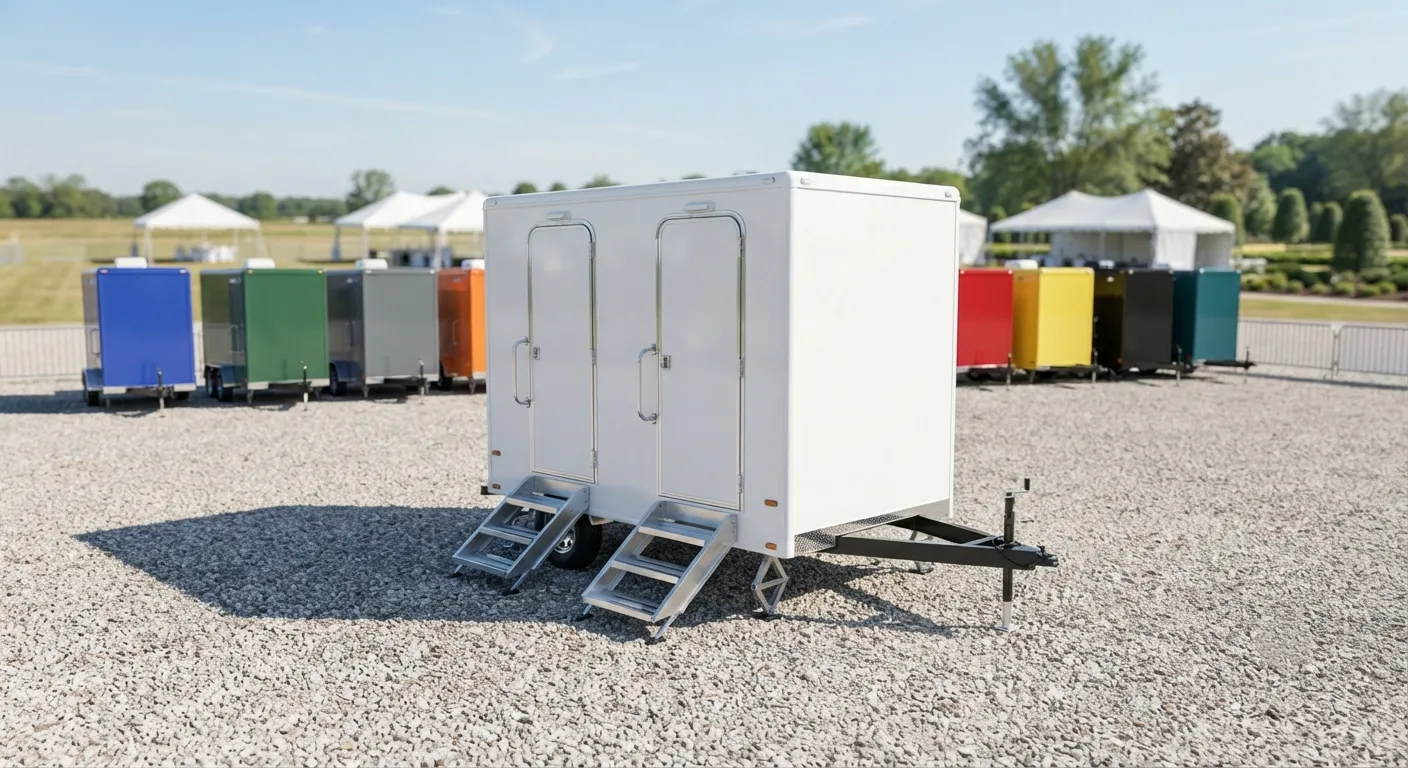
A restroom trailer rental needs level, firm ground and often a power hookup, plus more backing room than a single toilet. Check our 2 stall or 4 stall pages for footprint specifics before committing a spot.
Does temporary fencing affect where I can place a toilet?
It can, since fencing controls access and sightlines. Pair temporary fence rental placement with your toilet layout early, so the fence doesn't block the exact path your service truck needs on pump day.
Next step
Get a delivery date
Tell us the address, the dates and the headcount. We size the order and confirm the route.